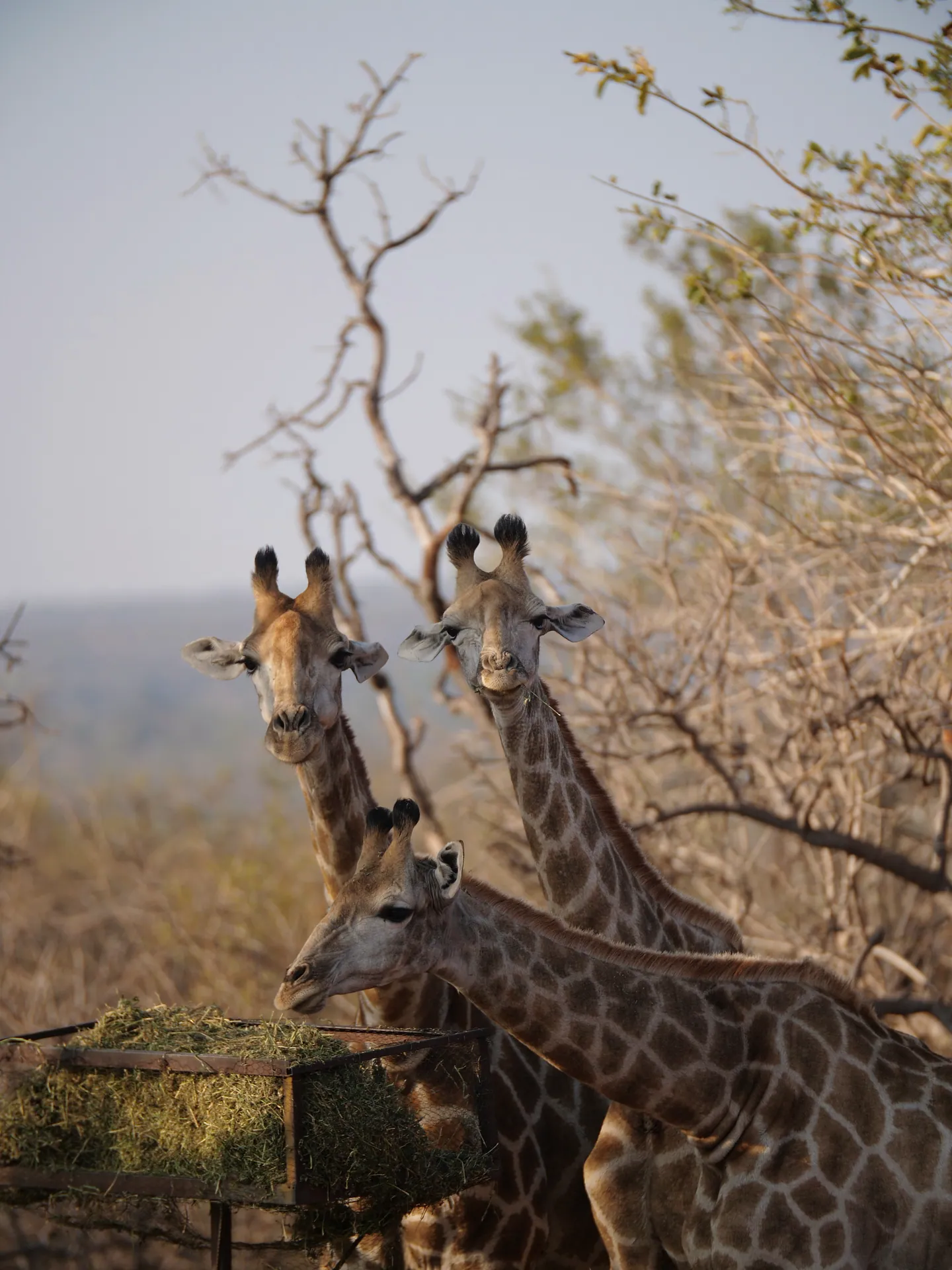
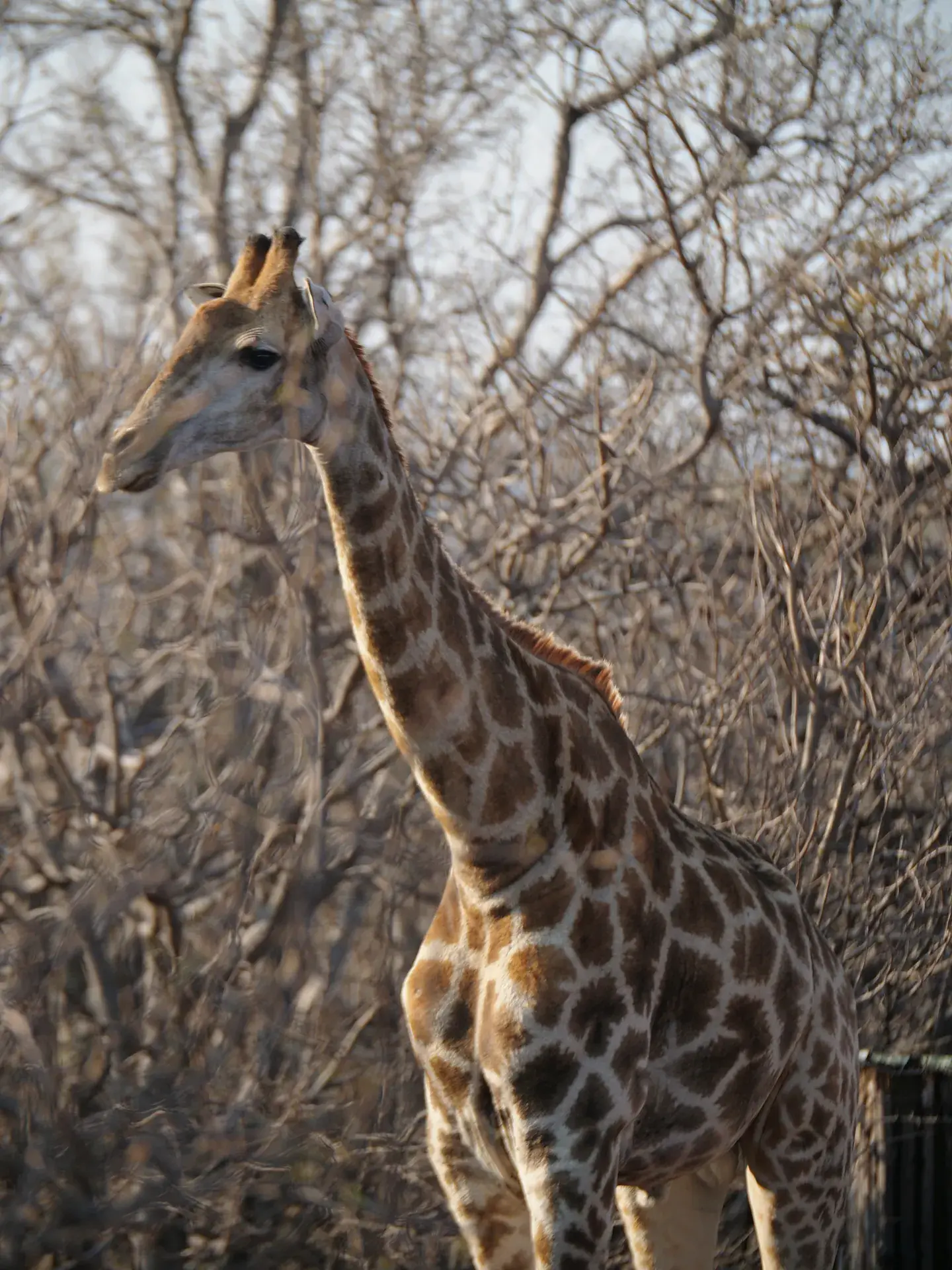
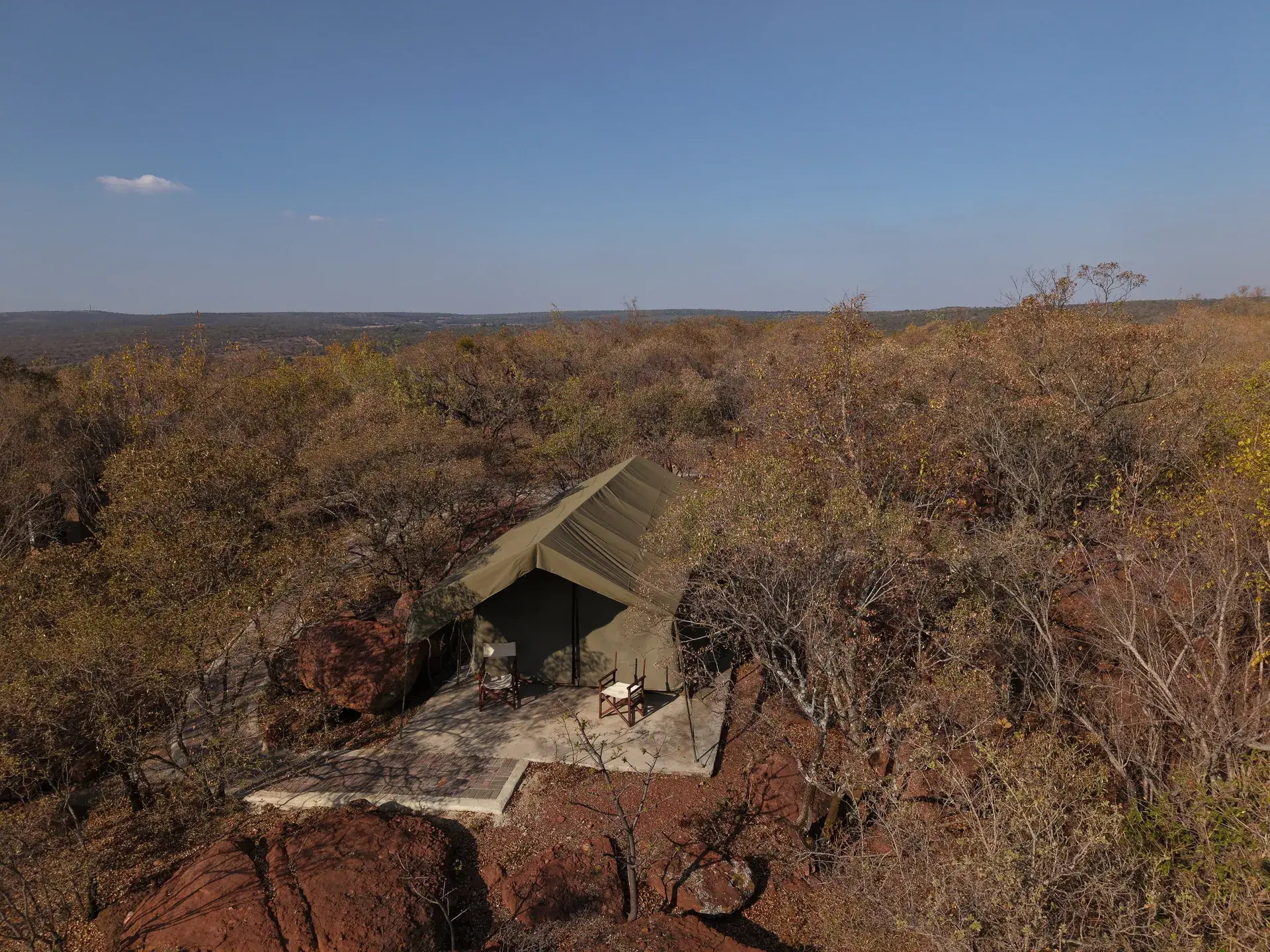
A giraffe changes the scale of a scene. Trees become feeding places, a small movement carries across a long neck and a familiar view of the bushveld suddenly has another level.
At Lion & Cheetah Sanctuary, giraffes are part of the wider setting. Give them more than the first photograph and there is plenty to notice.
Start with
what you notice
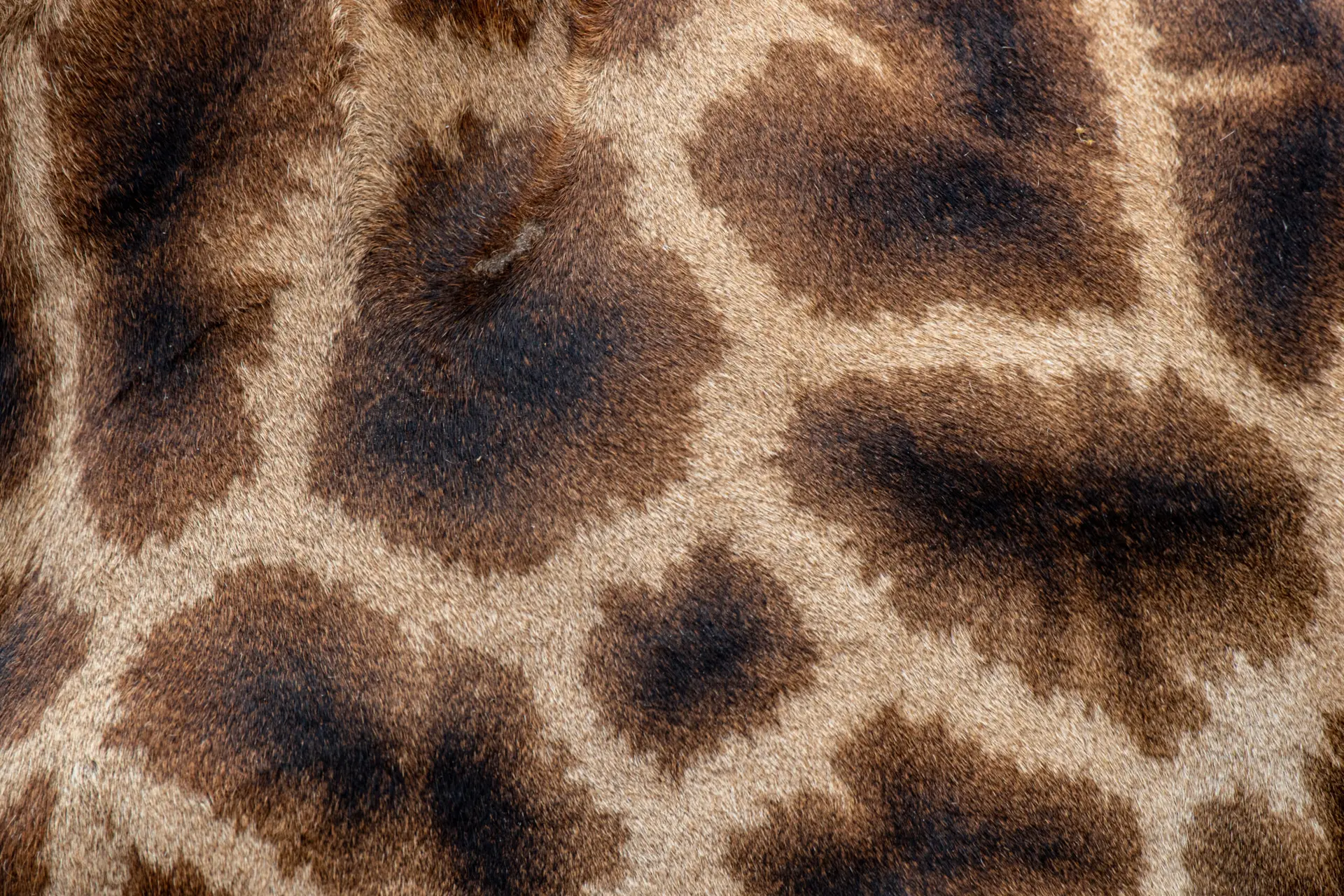
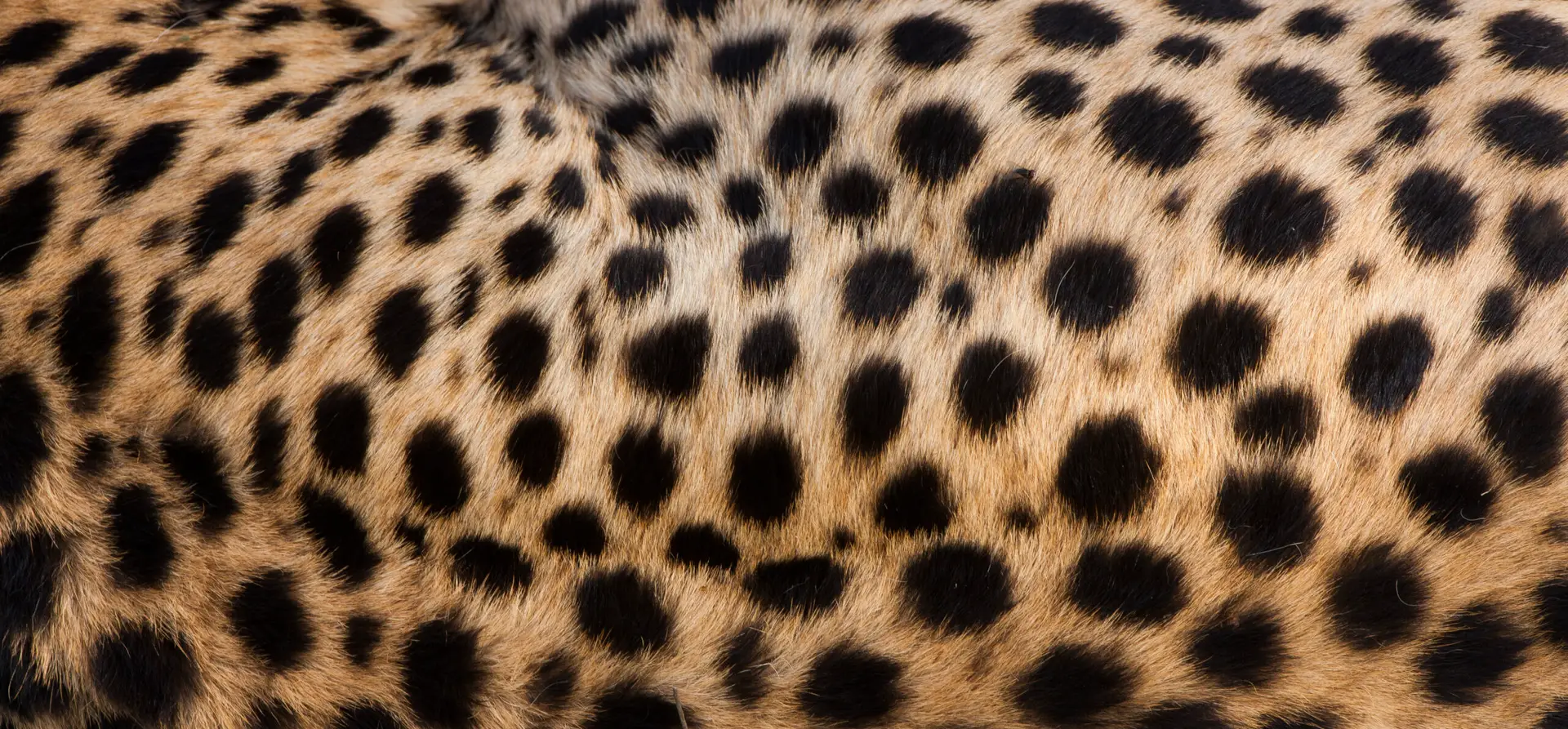
Where does your eye go first: the height, the coat pattern or the way the animal moves between trees? Stay with the scene for a little longer and notice what changes. A head turns, an ear follows a sound, or a long pause becomes part of the picture.
Giraffes are browsers, feeding on leaves and shoots. Their height lets them reach food above the level used by many other animals. A guide can help put that relationship with the vegetation into context.
Make the guide
part of the picture
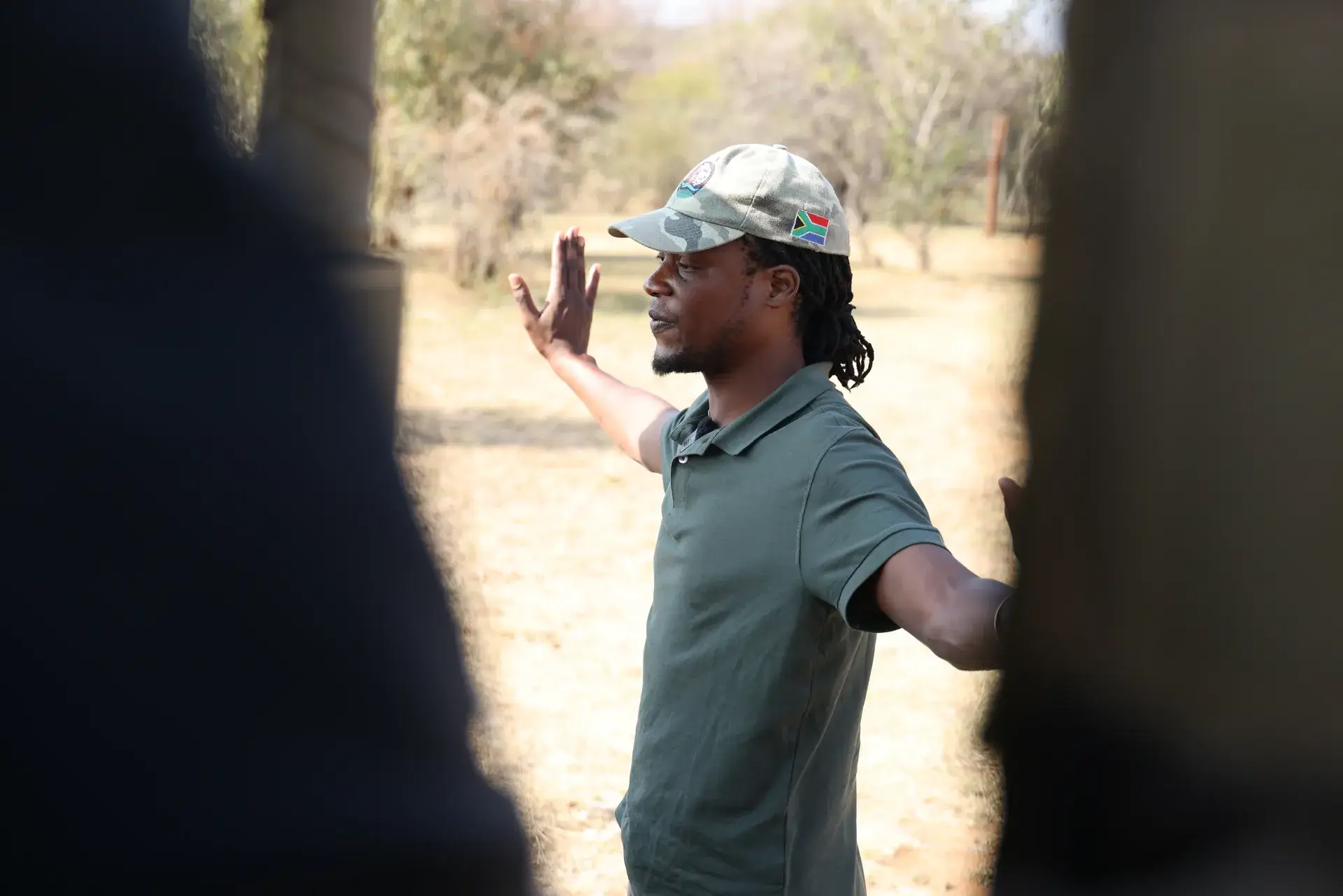
A question is often more memorable than a caption. Ask about the plants a giraffe is choosing, the way it uses the setting or how individuals can be recognised. Let the actual animal in front of you lead the conversation.
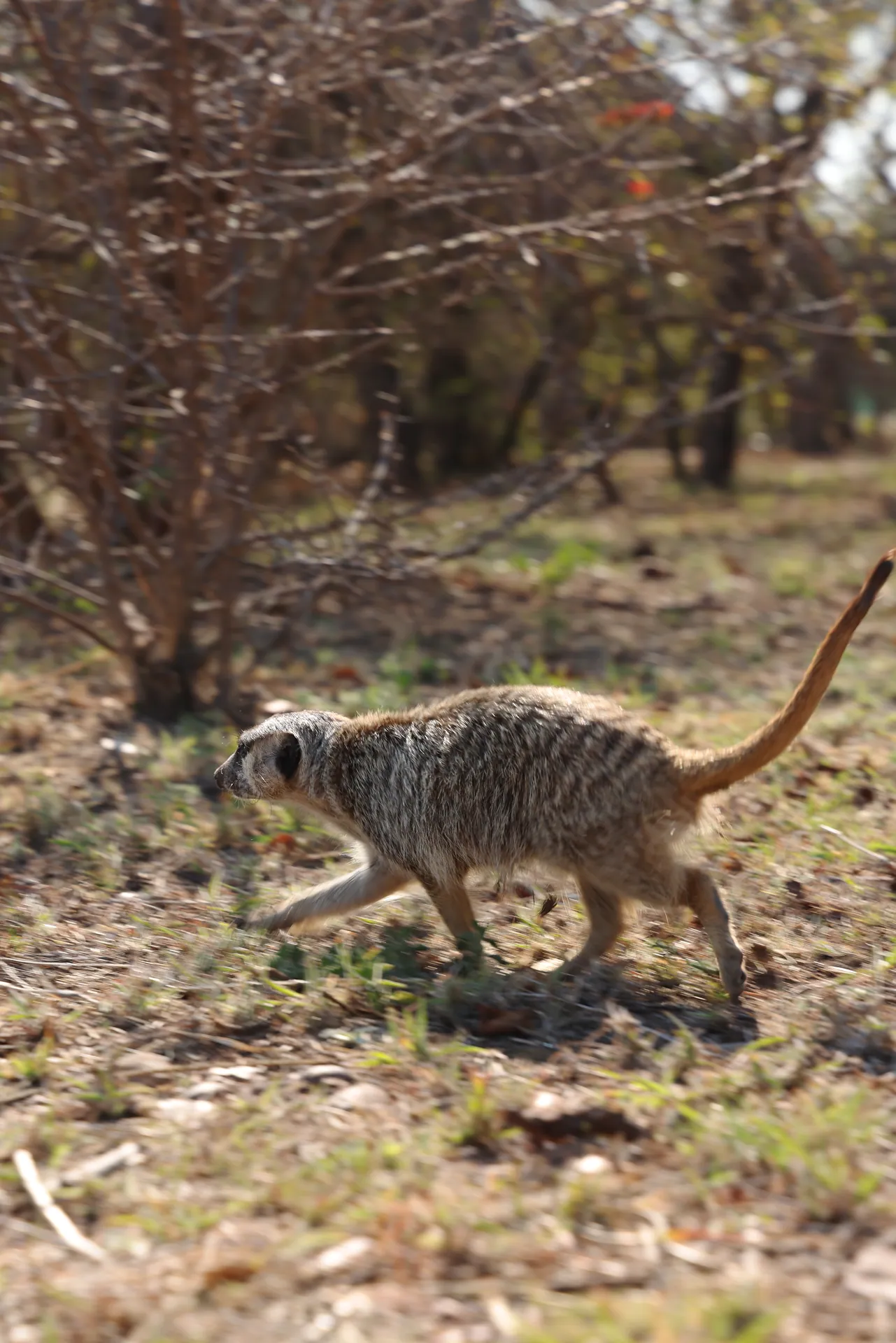
The same approach works for the smaller species too. Looking carefully is a habit, and a sanctuary visit gives you a good reason to practise it.